Table of Contents
A furnace not turning on in the middle of winter is one of the most stressful home emergencies there is — especially when you have kids, elderly family members, or pets in the house. The good news: the most common causes are also the most fixable, and a surprising number of them cost nothing to resolve. The bad news: some causes do require a licensed HVAC technician, and if you call for emergency service before checking the basics, you may pay a $150–$300 after-hours surcharge to have someone flip your circuit breaker.
This guide walks through exactly what to check, in the right order, before you make that call. It also gives you real repair cost ranges so you can evaluate any quote you receive and catch red flags before you sign anything.
Before You Do Anything — Safety First
Two situations require you to stop immediately and get everyone out of the house before any troubleshooting:
- If you smell rotten eggs or sulfur anywhere in your home: This is the odorant added to natural gas. Don't flip any light switches, don't use your phone inside, don't try to find the source. Leave immediately, leave the door open behind you, and call your gas company from outside or from a neighbor's house. This is a gas leak until proven otherwise.
- If your carbon monoxide detector is alarming: Get everyone — including pets — out of the house immediately. Call 911 from outside. Carbon monoxide is odorless and colorless; a CO detector alarm is never a false alarm to dismiss.
These situations are rare. If neither applies, keep reading — your problem is almost certainly one of the five things below.
How a Gas Furnace Actually Starts (The 60-Second Version)
Understanding the startup sequence helps you figure out where the breakdown is. When you call for heat, here's what's supposed to happen: the thermostat sends a signal to the furnace control board, which starts the inducer motor (a small fan that clears the heat exchanger of any residual gases). A pressure switch confirms the inducer is working. Then the igniter heats up — on modern furnaces, this is a glowing ceramic hot surface igniter, not a standing pilot light. The gas valve opens, gas ignites, and the flame sensor confirms the burner is lit. Finally, the blower motor kicks on and pushes heated air through your ducts.
If any step in that sequence fails, the furnace shuts down as a safety measure. Most of the checks below correspond to a specific step in that sequence.
5 Things to Check Before Calling Anyone
1. Check the Thermostat
Difficulty: Easy | Time: 2 minutes | Cost: $0
It's the obvious first check, and it resolves the problem more often than you'd think — especially after a power outage, a dead battery, or someone in the house bumping the settings.
Verify four things: the system is set to "Heat" (not "Cool" or "Off"), the set temperature is above the current room temperature by at least a few degrees, the fan is set to "Auto" rather than "On," and — if your thermostat runs on batteries — swap them out fresh. Low batteries cause erratic thermostat behavior on many models, including failure to trigger the furnace even when everything else is set correctly.
If you have a smart thermostat like a Nest or Ecobee, check whether it lost its Wi-Fi connection or went into away mode unexpectedly. A quick restart (pull it off the wall mount, wait 30 seconds, reseat it) can clear software glitches that prevent it from calling for heat.
If this fixes it: You're done. No call needed.
2. Check the Circuit Breaker and Furnace Power Switch
Difficulty: Easy | Time: 5 minutes | Cost: $0
Your furnace runs on electricity even if it heats with gas — the control board, igniter, inducer motor, and blower all need power. A tripped breaker cuts all of it.
Go to your electrical panel and find the breaker labeled "Furnace" or "HVAC." A tripped breaker sits in the middle position — not fully on or fully off. Reset it by pushing firmly all the way to "Off" first, then back to "On." Wait a full minute before turning the thermostat back to heat, to let the control board initialize.
While you're at it, check two more things: the furnace power switch, which looks exactly like a standard light switch and is typically mounted on the wall near the furnace or at the top of the basement stairs. It gets flipped off accidentally more than you'd expect. And make sure the furnace door panel is fully seated — most furnaces have a safety interlock that cuts power if the access panel is even slightly ajar.
If the breaker trips again within a few minutes of resetting: Don't keep resetting it. A repeatedly tripping breaker means there's an underlying electrical problem — a failing component drawing too much current. Call a technician rather than masking the symptom.
3. Check and Replace the Air Filter
Difficulty: Easy | Time: 5 minutes | Cost: $8–$30
A severely clogged air filter doesn't just reduce heating efficiency — it can trigger a complete furnace shutdown. Here's why: when airflow is restricted enough, the heat exchanger can't release its heat fast enough and overheats. A safety device called the high-limit switch detects this and shuts the furnace off to prevent damage. If the limit switch trips repeatedly, the control board may lock the furnace out entirely until the cause is addressed.
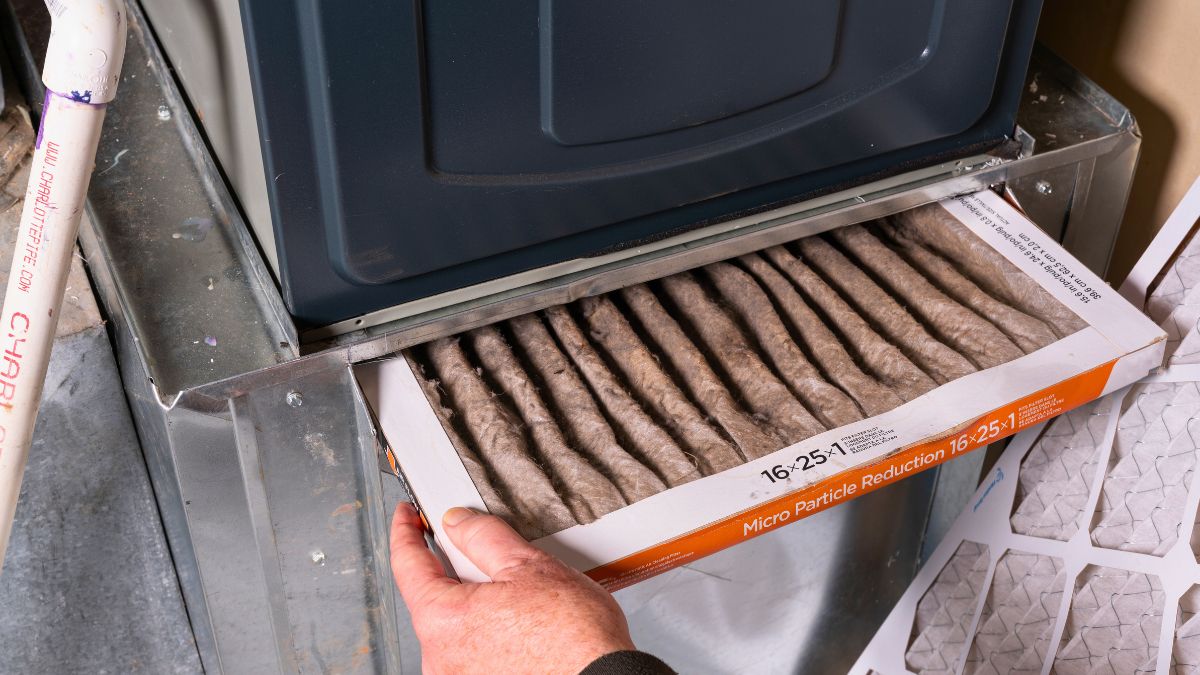
Find your filter — it's either in the return air vent (a large wall or ceiling vent that pulls air in) or inside the furnace cabinet itself, usually behind a small access door. Pull it out and hold it up to the light. If you can't see light through it, replace it before doing anything else and give the furnace 20–30 minutes to cool down before trying to restart.
Filters should be replaced every 1–3 months. Every month if you have pets or anyone in the house with allergies. If your furnace shut down and your filter looks like a gray wool blanket, this is almost certainly why.
4. Check the Pilot Light (Older Furnaces Only)
Difficulty: Easy–Moderate | Time: 10–20 minutes | Cost: $0
If your furnace was installed before roughly 2000, it likely has a standing pilot light — a small flame that burns continuously and ignites the main burners when heat is called for. Modern furnaces use electronic hot surface igniters instead and don't have a pilot light to check.
To check: find the small access panel near the bottom of the furnace. You should see a small, steady blue flame near the burner assembly. No flame means the pilot is out.
To relight:
- Turn the gas control knob to "Off." Wait 5 full minutes — do not skip this step.
- Turn the knob to "Pilot."
- Press the knob down and hold it while pressing the igniter button (or use a long match or lighter). Keep holding the knob down.
- Once lit, hold the knob down for 30–60 seconds to heat the thermocouple. Letting go too soon is the most common relighting mistake — the pilot dies immediately because the thermocouple hasn't confirmed the flame yet.
- Release slowly. Turn the knob to "On."
If the pilot won't stay lit after you release the knob: the thermocouple is failing. It's a small copper rod that sits in the pilot flame and signals the gas valve to stay open. When it fails, the gas valve shuts as a safety measure even with a flame present. Thermocouple replacement runs $100–$300 with a technician; the part itself is $10–$20.
5. Check the Furnace Error Code
Difficulty: Easy | Time: 5 minutes | Cost: $0
Most furnaces manufactured in the last 20 years have a small LED light on the control board that flashes an error code when something goes wrong. This is one of the most underused diagnostic tools available to homeowners — and it can tell you exactly what failed before anyone shows up with a service charge.
Open the furnace's front access panel (you may need to turn a latch or lift the panel up and out). Look for a small LED light, usually red or green, on the circuit board. It will be flashing a pattern — for example, three blinks, pause, one blink. On the inside of the access panel door, there's typically a sticker that decodes these patterns. Common codes include:
- Pressure switch fault: The inducer isn't clearing the heat exchanger, or the pressure switch itself has failed.
- Limit switch open: The furnace overheated — most likely from a clogged filter or blocked vents. Replace the filter, clear any blocked registers, wait 20–30 minutes, and try restarting.
- Ignition failure: The furnace tried to light and couldn't — typically a failed igniter, dirty flame sensor, or gas supply issue.
- Flame sensor fault: The burner lit but the sensor didn't confirm it — usually because the flame sensor is coated in residue and needs cleaning.
Even if you can't fix the underlying problem yourself, knowing the error code before you call a technician puts you in a much better position — you can describe the specific fault rather than just "it's not working," and you can verify that whatever the technician diagnoses matches what the furnace is actually reporting.
Not sure what your furnace is telling you?
Add a few photos, describe your symptoms, and Match2Fix tells you what's likely wrong — in 30 seconds, with no sales pitch and no spam.
Get Your Free Diagnosis →Common Furnace Problems by Symptom
If the five checks above didn't solve it, match your symptom to the most likely cause below.
Furnace Clicks But Won't Ignite
You hear the furnace try to start — the inducer runs, you hear clicking — but no heat follows. This is almost always an igniter or flame sensor problem.
The hot surface igniter is a ceramic element that glows orange-hot to light the gas. It's the most commonly replaced furnace part. When it fails, the furnace goes through its startup sequence, the gas valve opens, but nothing ignites — the control board detects no flame and shuts down. Igniter replacement runs $100–$250 with a technician; the part is $20–$50.
The flame sensor is a thin metal rod that sits in the burner flame and confirms ignition. It gets coated in residue over time, which insulates it enough that it can't detect the flame even when the burner is lit. A technician can clean it in minutes (often no parts cost), or replace it for $80–$250.
Furnace Turns On Then Shuts Off Quickly (Short Cycling)
The furnace starts, runs for 30 seconds to a few minutes, then shuts off — and repeats this pattern without ever actually heating the house. Short cycling has a few common causes:
- Clogged filter or blocked vents causing the high-limit switch to trip from overheating — address this first, it's free.
- Flame sensor failure — the burner lights, the sensor doesn't confirm it, the gas valve shuts as a safety measure.
- Pressure switch issue — the inducer is running but the pressure switch isn't closing, so the furnace aborts the startup sequence. Can be a failed switch ($100–$300) or a blocked condensate drain on high-efficiency furnaces ($0–$75 to clear).
- Oversized furnace — a furnace that's too large for the space heats it too quickly and short cycles structurally. This is a design problem, not a repair situation.
Furnace Turns On But Blows Cold Air
The blower is running and air is moving through your vents, but it's not warm. Most likely causes:
- Fan set to "On" instead of "Auto" on the thermostat — with "On," the blower runs continuously even when the burner isn't firing. Switch to "Auto."
- Igniter or flame sensor failure — the blower started but the burner never lit.
- Gas supply issue — verify your gas is on (check other gas appliances like your stove or water heater). If nothing gas-powered is working, call your gas company.
- Limit switch tripped from overheating — replace the filter, let it cool, try again.
Furnace Makes Loud Banging, Screeching, or Grinding Noises
- Loud bang or boom on startup: Delayed ignition. Gas is building up in the combustion chamber for a moment before igniting — the buildup causes a small explosion when it finally lights. This stresses the heat exchanger over time and should be diagnosed promptly. Common cause is a dirty burner or failing igniter.
- Screeching or squealing: Blower motor bearings failing. The motor will eventually seize. Blower motor replacement runs $300–$900.
- Grinding or metal-on-metal sound: Blower wheel has come loose or is hitting the housing. Turn the furnace off immediately and call a technician — running it risks destroying the blower motor.
- Rattling: Often a loose panel or ductwork — check that all access panels are fully seated. If the rattling is internal, don't ignore it.
Furnace Won't Start At All — No Sounds, No Lights
Complete silence when the thermostat calls for heat usually means a power problem: tripped breaker, power switch off, or a failed control board. Work through Check #2 above first. If power is confirmed on and the furnace still shows no signs of life, the control board may have failed — replacement runs $300–$650.
DIY Fix or Call a Technician? Here's How to Decide
Repairs Most Homeowners Can Handle
| Repair | Difficulty | Time | Cost | Skills Needed |
|---|---|---|---|---|
| Adjust thermostat settings / replace batteries | Easy | 2 min | $0–$5 | None |
| Reset circuit breaker | Easy | 3 min | $0 | Know where your panel is |
| Flip furnace power switch back on | Easy | 1 min | $0 | None |
| Reseat furnace access panel | Easy | 2 min | $0 | None |
| Replace air filter | Easy | 5 min | $8–$30 | None |
| Read and decode furnace error code | Easy | 5 min | $0 | None |
| Relight pilot light (older furnaces) | Easy–Moderate | 10–20 min | $0 | Comfortable near a gas appliance |
| Clear condensate drain (high-efficiency furnaces) | Easy–Moderate | 15–30 min | $0 | Wet/dry vac helpful |
Repairs That Always Require a Licensed HVAC Technician
| Repair | Why It Needs a Pro | Typical Cost |
|---|---|---|
| Igniter replacement | Gas system component; involves the combustion sequence | $100–$250 |
| Flame sensor cleaning or replacement | Inside the combustion chamber; requires gas system knowledge | $80–$250 |
| Thermocouple replacement | Gas safety component on older standing-pilot furnaces | $100–$300 |
| Pressure switch replacement | Involves the venting and combustion safety system | $100–$375 |
| Blower motor replacement | Electrical work inside the furnace cabinet | $300–$900 |
| Gas valve replacement | Direct gas line work; certification required | $200–$800 |
| Control board replacement | Complex electrical; incorrect installation can damage other components | $300–$650 |
| Heat exchanger replacement | Carbon monoxide risk; safety-critical; often warrants full system replacement | $1,000–$3,500 |
What Furnace Repairs Actually Cost (And How to Avoid Overpaying)
Here's what you should expect to pay for the most common furnace repairs in 2026, based on current national data:
- Diagnostic / service call: $75–$150 (typically credited toward the repair if you proceed)
- Igniter replacement: $100–$250
- Flame sensor cleaning or replacement: $80–$250
- Thermocouple replacement: $100–$300
- Pressure switch replacement: $100–$375
- Limit switch replacement: $100–$375
- Thermostat replacement: $100–$600 depending on type
- Gas valve replacement: $200–$800
- Control board replacement: $300–$650
- Blower motor replacement: $300–$900
- Draft inducer motor replacement: $200–$1,500
- Heat exchanger replacement: $1,000–$3,500
- Emergency / after-hours surcharge: $150–$300 on top of any of the above
The after-hours surcharge is real and significant. If you're reading this at 10 PM and your furnace won't start, going through the five checks above before calling could save you $150–$300 — or solve the problem entirely.
Red Flags in a Furnace Repair Quote
- No itemized breakdown. You should be able to see the service call fee, parts cost, and labor separately. Any legitimate contractor will provide this. If they won't, that's a signal.
- Heat exchanger replacement quoted without a carbon monoxide test. A cracked heat exchanger is a serious safety issue — but it's also a common upsell. A legitimate diagnosis includes a CO test and a visual inspection. Ask to see where the crack is.
- Full system replacement recommended for a furnace under 15 years old without a clear explanation of why repair isn't viable. Push back and ask specifically what failed and what it would cost to repair just that component.
- Pressure to decide on the spot. "This price is only good tonight" is a sales tactic. A legitimate diagnosis doesn't have a 24-hour expiration.
- Quote is significantly higher than average with no explanation. For any repair over $400, get a second opinion. HVAC pricing varies significantly by company, and a $150 igniter replacement at one company can be quoted at $450 at another.
The 50% Rule for Furnace Replacement
If the repair quote exceeds 50% of what a new furnace would cost, and your furnace is 15+ years old, replacement is almost always the smarter financial decision. A new gas furnace installed typically runs $2,500–$7,500 depending on size and efficiency rating, and comes with a 10-year parts warranty. Spending $1,800 to repair a 20-year-old furnace with no warranty — when a new unit would cost $3,500 — is rarely the right call.
Furnaces typically last 15–20 years with proper maintenance. If yours is approaching that range, factor remaining lifespan into any repair decision.
Get diagnostic clarity before you call anyone
Match2Fix tells you what's likely wrong with your furnace in 30 seconds — so you can walk into every contractor conversation informed. No spam, no sales pitch, no contractor kickbacks. Just honest answers.
Try Match2Fix Free →How to Keep Your Home Warm While You Wait
If you've determined you need a technician and it won't happen until morning, here's how to keep your home safe and livable overnight:
- Close off unused rooms. Shut doors to bedrooms, bathrooms, and spaces you're not using. Concentrate whatever heat remains in the rooms where people actually are.
- Use space heaters carefully. Electric space heaters are effective for a single room but draw significant power. Never run one unattended, never run one near bedding or curtains, and don't run multiple large heaters on the same circuit. Keep them on hard flooring, not carpet, and always plug directly into the wall — never into an extension cord.
- Layer up and use your oven strategically. Baking something heats the kitchen meaningfully. Don't use your oven as a space heater by leaving the door open — it's a fire risk and, with gas ovens, a CO risk — but cooking dinner will raise the kitchen temperature noticeably.
- Protect your pipes. If temperatures drop significantly overnight, the bigger risk may be frozen pipes, not discomfort. Let faucets drip slightly — moving water freezes more slowly than standing water. Open cabinet doors under sinks on exterior walls to let house air reach the pipes.
- Know when to leave. For households with infants, elderly residents, or people with medical conditions, indoor temperatures below 55°F are a health risk. If the house is getting genuinely cold and won't warm up, don't tough it out — a hotel, a friend's house, or a family member's place is the right call.
Frequently Asked Questions
Why won't my furnace turn on even though the thermostat is set correctly?
The most common reasons are a tripped circuit breaker, a clogged air filter triggering the high-limit switch, a furnace power switch accidentally turned off, or an access panel that's not fully seated (cutting power via the safety interlock). Work through the five checks in order before calling anyone. If all of those check out, the issue is likely a failed igniter, flame sensor, or pressure switch — all of which require a technician.
Why does my furnace start then immediately shut off?
This is called short cycling, and it has a few common causes: a clogged filter causing the high-limit switch to trip from overheating, a dirty or failing flame sensor that can't confirm the burner is lit, a pressure switch problem preventing the startup sequence from completing, or a cracked heat exchanger triggering a safety shutoff. Start by replacing the filter. If that doesn't resolve it, you need a technician to diagnose which safety component is tripping.
How do I reset my furnace when it won't turn on?
Many furnaces have a reset button — a small red or yellow button on the burner assembly, usually near the igniter. Press it once and wait a few minutes before trying to call for heat again. Don't press it more than once or twice; repeated resets without addressing the underlying cause can cause a gas buildup. Also try resetting the circuit breaker: push it firmly to "Off" first, then back to "On." Wait one full minute before turning the thermostat back to heat.
How much does emergency furnace repair cost?
Emergency after-hours service typically adds $150–$300 on top of whatever the repair itself costs. The diagnostic visit alone runs $75–$150. Minor repairs like an igniter or flame sensor replacement add $100–$250. So a midnight emergency call for a failed igniter might run $400–$600 total — for a part that costs $25. That's why checking the basics yourself first matters. If the furnace has a more serious problem like a failed control board or blower motor, after-hours costs can easily push past $1,000.
Is it safe to run a space heater overnight if my furnace is out?
Yes, with important precautions. Use a heater with automatic tip-over shutoff and overheat protection (most modern units have both). Keep it at least three feet from anything flammable. Never run it while you're sleeping in the same room without being certain it has both safety features. Plug directly into the wall outlet — never an extension cord. Don't run multiple large heaters on the same circuit. For overnight use, a ceramic space heater is safer than a radiant or oil-filled model because it doesn't maintain an exposed heating element at high temperature.
How long does a furnace last?
A well-maintained gas furnace typically lasts 15–20 years. Electric furnaces can last slightly longer — 20–30 years — because they have fewer combustion-related components to wear out. The biggest factors in longevity are annual tune-ups, regular filter changes, and addressing small problems before they cascade into larger ones. Furnaces that run without maintenance can fail significantly earlier than the 15-year mark.
What does a furnace tune-up include and do I actually need one?
A professional furnace tune-up typically includes: inspecting and cleaning the burners, igniter, and flame sensor; testing the heat exchanger for cracks; checking gas pressure; lubricating blower motor bearings; testing the limit and pressure switches; inspecting the flue and venting; and checking the filter. It costs $75–$200 and should be done every fall before heating season. The value isn't just in the cleaning — it's in catching a weakening igniter, a slightly cracked heat exchanger, or a sluggish blower before they fail on the coldest night of the year.
Can a cracked heat exchanger really cause carbon monoxide poisoning?
Yes. The heat exchanger is the metal component that separates combustion gases (including carbon monoxide) from the air that circulates through your home. A crack allows those gases to mix with your heated air. This is why CO detectors are non-negotiable in any home with a gas furnace, and why a legitimate heat exchanger diagnosis includes a CO test. If a technician tells you your heat exchanger is cracked, ask to see it — but also take it seriously. This is one instance where the scare is real.
Get instant answers about your furnace
Describe your symptoms and Match2Fix tells you what's likely wrong — in 30 seconds, with no spam and no contractor kickbacks. Just honest answers.
Try Match2Fix Free